

PAT Testing
Portable Appliance Testing (PAT) checks that the electrical equipment your staff, tenants or customers actually touch — kettles, computers, extension leads, power tools — is safe to use. We PAT test for businesses and landlords across Bury St. Edmunds and Suffolk, with proper records, sensible schedules and as little disruption to your working day as possible.
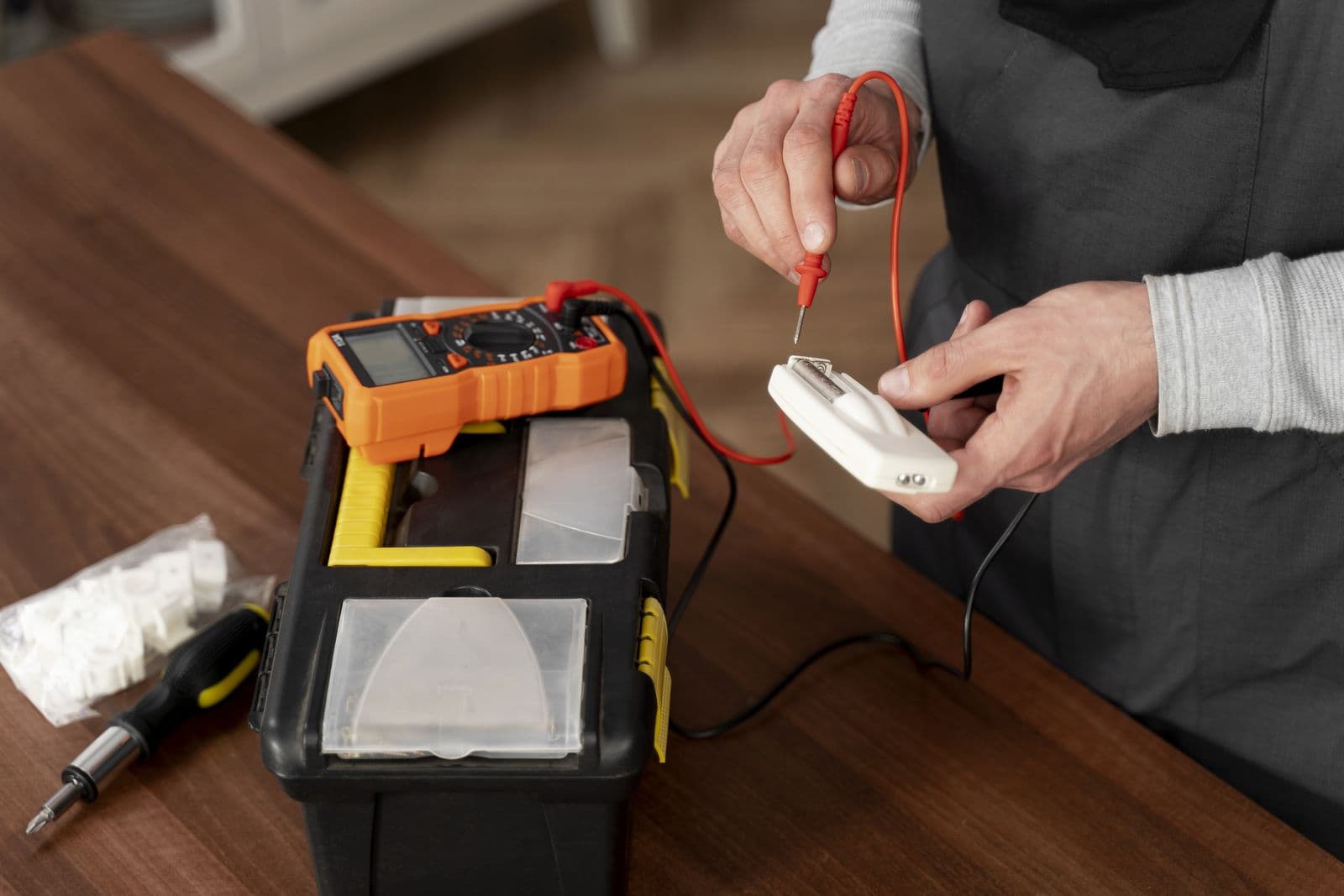
About PAT testing
There’s no law that says “you must PAT test annually” — that’s a myth the industry sometimes leans on. What the law (the Electricity at Work Regulations) does require is that electrical equipment is maintained in a safe condition. PAT testing is simply the recognised, documented way to prove you’re doing that — and it’s what insurers, landlords’ agents and health-and-safety audits ask to see. We’ll recommend a testing interval that matches your actual risk, not a blanket annual charge for everything.
A test that does its job
 Visual inspection plus electronic testing of each appliance
- Pass/fail labelling with test date
- A full asset register and certificate for your records — the document your insurer wants
- Repair or clear advice on any failures (often it’s just a plug or fuse)
- Scheduling that works around your business — early mornings, quiet days, or alongside other electrical work
And what the test actually involves
Offices, shops, cafés and restaurants · landlords providing appliances in rentals · salons and gyms · schools and community venues · tradespeople with power tools · anyone whose insurance or contracts require evidence of appliance safety.
More than a sticker. Each appliance gets a proper visual inspection first — plug, fuse rating, cable condition, signs of damage or overheating — because that catches the majority of real-world faults. Then instrument testing appropriate to the appliance class: earth-continuity checks for Class I equipment (kettles, toasters, most workshop tools), insulation testing for Class II (“double-insulated” — most modern IT and chargers). Extension leads and multi-way adaptors get tested too — they fail more often than almost anything they’re plugged into.
The IET Code of Practice — the standard the industry works to — recommends intervals based on risk, not a flat “everything annually.” Power tools on a building site might warrant checks every few months; kitchen and cleaning equipment roughly yearly; low-risk office IT every two to four years. We classify your equipment and set a schedule that keeps you demonstrably safe and compliant without paying to over-test hundreds of low-risk items every year.
The document that satisfies an audit
You get a full asset register — every item, its ID, location, result and next-due date — plus a certificate for the file. That’s the document that satisfies insurers, landlords’ agents, head-office audits and health-and-safety reviews. For multi-site businesses we keep one consolidated register so any site inspection can be answered in minutes.
Years of PAT testing produce a predictable list: damaged plugs and cracked casings, incorrectly-rated fuses (a 13A fuse in a lamp that needs 3A), kettle and cleaning-equipment leads worn through at the strain relief, daisy-chained extension leads carrying loads they were never made for, and personal appliances brought from home that nobody ever inspected. None are exotic — but each is exactly how workplace electrical fires start, and every one is cheap to fix when caught at a test. If an item fails, that’s the system working.