

House & Part Rewires
A rewire is major work — so the first thing worth saying is: not every older house needs one. Sometimes a consumer unit upgrade and some remedial work is enough, and we’ll tell you when that’s the case. But when wiring is genuinely at the end of its life, a rewire is the difference between a home that’s safe for decades and one that’s quietly deteriorating behind the walls.
Signs a property may need rewiring
 Wiring insulated in rubber, lead or fabric — common pre-1970s; it becomes brittle and dangerous with age
- Round-pin sockets, braided flex, or sockets on skirting boards
- No earth on lighting circuits
- Persistent electrical smells, warm switches, flickering — or frequent tripping
- An EICR with multiple C2s across circuits
- A renovation or extension the existing installation can’t support
Full or part rewire?
Every cable, socket, switch and the consumer unit replaced. Right for houses untouched for 40+ years or with failing wiring throughout.
One floor, an extension, a kitchen or just the circuits that failed. Right when the rest of the installation is sound. Our survey tells you honestly which you need — we don’t sell full rewires where part will do.
Planned around how you live
- New cabling throughout the agreed scope
- Sockets, switches and lighting points where you actually want them — we plan this with you (more sockets, USB points, outdoor power, network points)
- A new consumer unit with RCBO protection
- Full testing and certification
- Building control notification (Part P)
- Making good as we go
And the honest bit about disruption
- 01Survey & fixed quote
Room by room, with a socket-and-switch plan you sign off before anything starts.
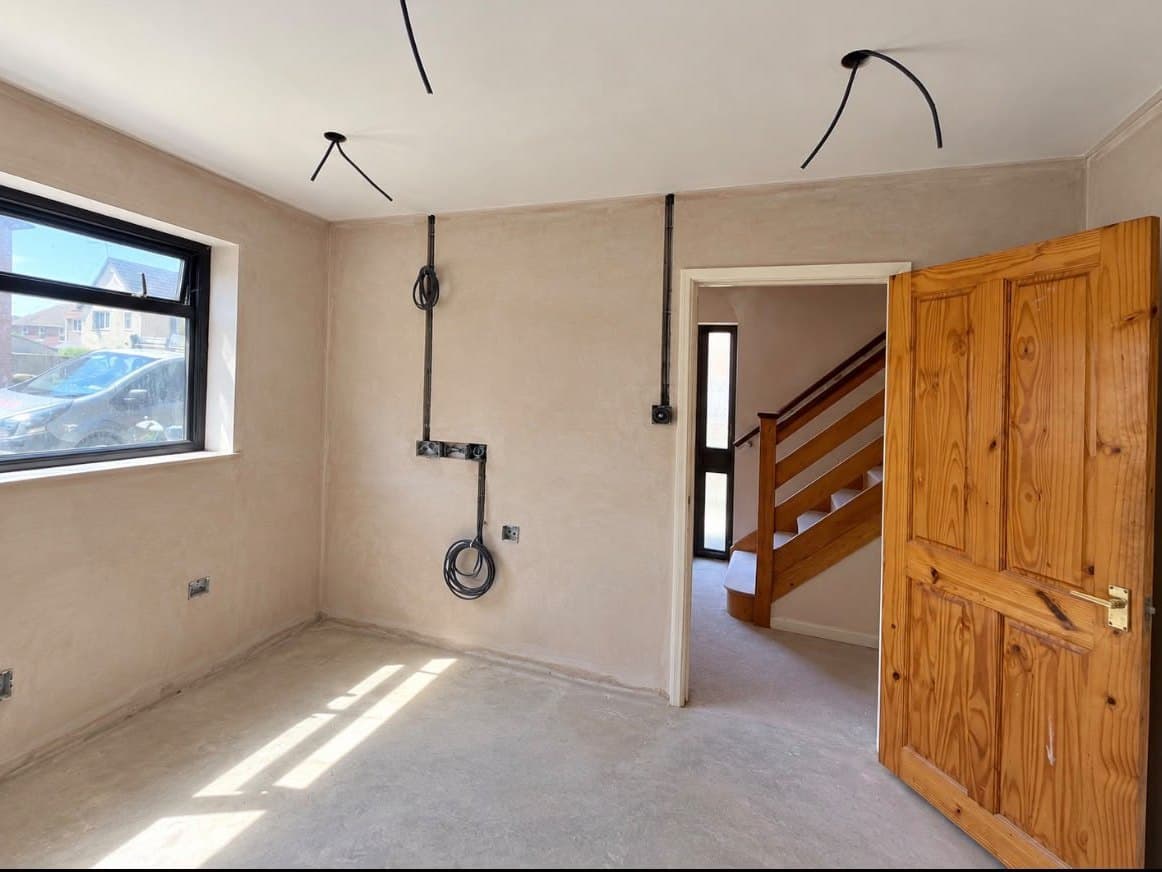
- 02First fix
Cables in, floors and walls opened where needed. The disruptive stage: dust, lifted boards, chased walls. We protect everything we can and tidy daily, but we won’t pretend it’s invisible.
- 03Second fix
Faceplates, switches, lights and the new board go on.
- 04Test, certify, make good
Every circuit tested, certificate issued, walls and floors made good.
A typical 3-bed rewire takes roughly 5–10 days depending on scope. You usually don’t need to move out — we work room by room and keep power on where safe — though for full rewires some customers prefer to be away for first fix.
What affects the price — and how to plan
The honest drivers: the size of the property and number of rooms; how many sockets, switches and lighting points you want (the biggest variable you control); whether cables can run under floors and through voids or need walls chased; how much making-good and redecorating-readiness you want from us; and any extras that are cheap now but pricey later — outdoor power, EV-ready cabling, network points. Every quote is itemised so you can see exactly where the money goes, and trim or add before we start.
A little preparation makes a rewire dramatically smoother. Walk each room with us at the survey and think about how you actually live — where the TV really goes, where you charge things, what the Christmas-lights plan is. Clear what you can from floors and lofts before first fix. If you’re redecorating anyway, sequence it after the rewire, not before. And if the house is going to be empty at any point — between tenants, before you move in — that’s the golden window: the same rewire is faster, cheaper and cleaner in an empty property than a furnished one.